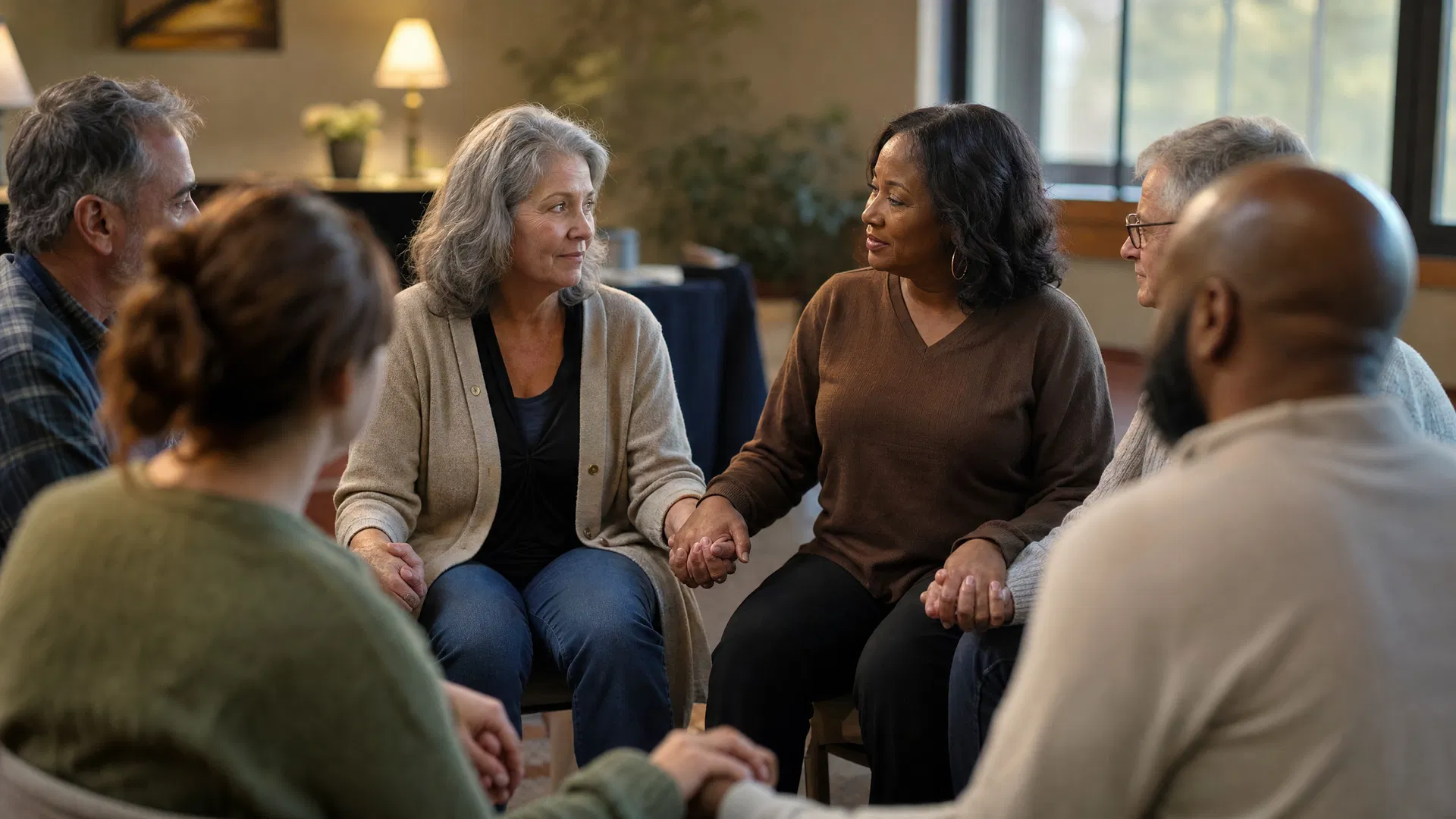
Grief is not just an emotional experience. It affects your body, your sleep, your immune system, and your ability to think clearly. Research consistently shows that social isolation following a significant loss dramatically increases the risk of complicated grief and depression. And yet, when we are grieving, isolation is often exactly what we reach for.
The antidote is community — not the kind that tells you to "stay strong" or "move on," but the kind that sits with you in the difficulty, without trying to fix it.
Why Community Matters in Grief
Social support is one of the most powerful protective factors against complicated grief. Community-based grief support — including peer support groups, structured programs like GriefShare, and informal community connection — can be as effective as individual therapy for many people navigating loss. What makes community support effective is not the advice it offers. It is the presence it provides.
The Role of Physical Activity
Physical activity during grief serves a dual purpose. It provides the neurochemical benefits of exercise — reduced cortisol, improved sleep, endorphin release — while also offering structure and routine at a time when everything feels chaotic. Movement is not a cure for grief, but it is a powerful tool for managing its physical and emotional weight.
Resources for Grief Support
- GriefShare: griefshare.org — grief recovery support groups nationwide
- SAMHSA National Helpline: 1-800-662-4357 (free, confidential, 24/7)
- 988 Suicide and Crisis Lifeline: Call or text 988
- Tap Out Depression: tapoutdepression@gmail.com
You do not have to find your way back alone. We are here.